🌟꼬부랑 할머니가 – 말놀이 한국어
🌟 Kkoburang Halmeoni – Learn Korean with Korean Word Play & Rhythm
🎵
가락과 장단에 맞춰 한국어 시작해요
Start Korean to the Rhythm and Beat – Oldies but Goodies!
🇰🇷 ‘꼬부랑 할머니가’는 같은 말소리를 반복하며 운율을 만드는 전래 말놀이입니다. 아이들이 말소리와 억양, 의성어를 자연스럽게 익히기에 좋아요.
🇺🇸 “Kkoburang Halmeoni” is a traditional Korean word play that repeats similar sounds to create rhythm. It helps children naturally learn Korean sounds, intonation, and onomatopoeia.
https://youtu.be/EC4VuENV8aQ?si=JSXVHdN2R-49zXZV
(글의 맨위쪽의 youtube 영상을 보면 이 가사와 동일한 노래를 즐길 수 있습니다.
You can enjoy the same song with these lyrics by watching the YouTube video at the top of this post.)
📜
🇰🇷 가사
Lyrics in Korean
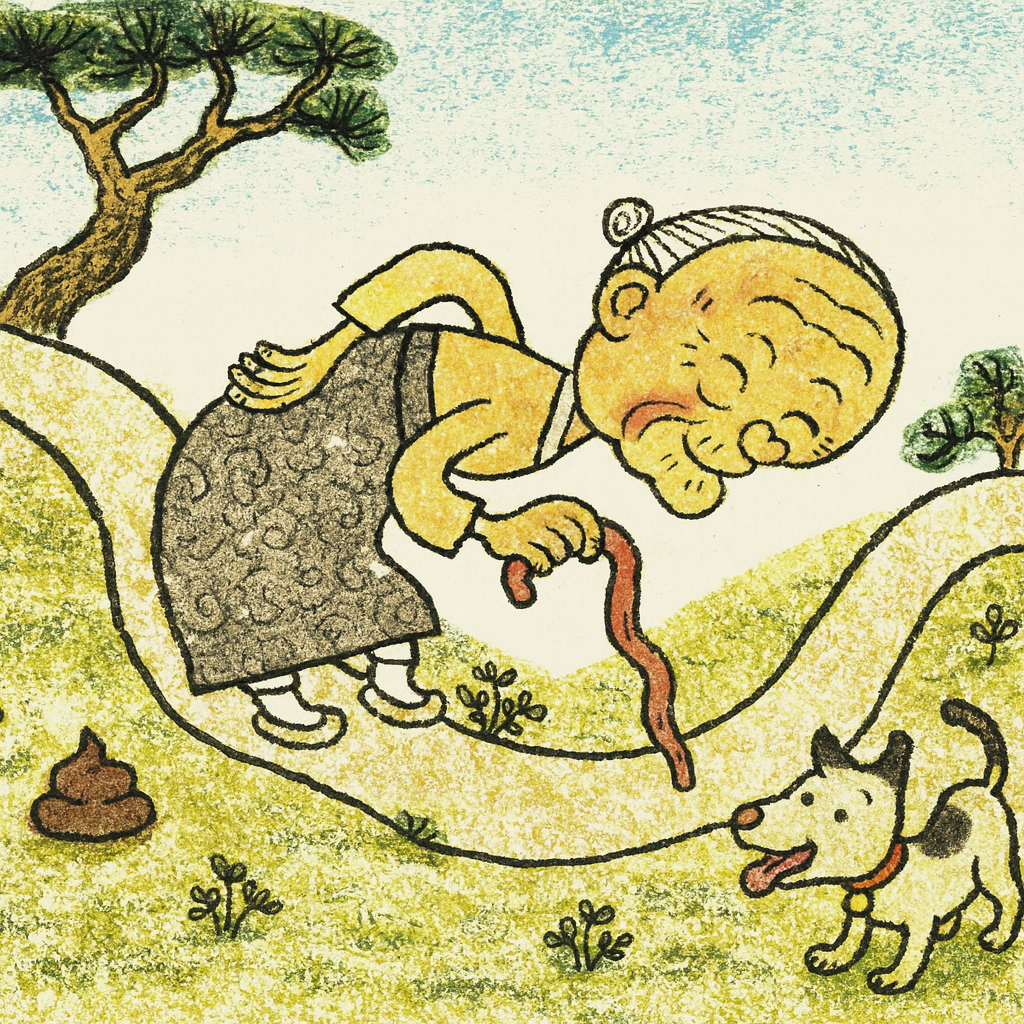
꼬부랑 할머니가
꼬부랑 치마를 입고
꼬부랑 댕기를 드리고
꼬부랑 지팡이를 짚고
꼬부랑 강아지를 데리고
꼬부랑 길로 가다가
꼬부랑 똥이 마려워
꼬부랑 나무에 올라가서
꼬부랑 똥을 눴거든
꼬부랑 똥을 누니까
꼬부랑 강아지가
꼬부랑 똥을 날름 먹어 버리니까
꼬부랑 할머니가
꼬부랑 지팡이로 딱 때려 주니까
꼬부랑 강아지가
꼬부랑 깽깽 꼬부랑 깽깽
네 똥 먹고 천 년 사나 내 똥 먹고 만 년 살지
꼬부랑 깽깽 꼬부랑 깽깽 그러면서 달아났다 그러대
📜 전체 가사 & 뜻
Full Lyrics with Meanings
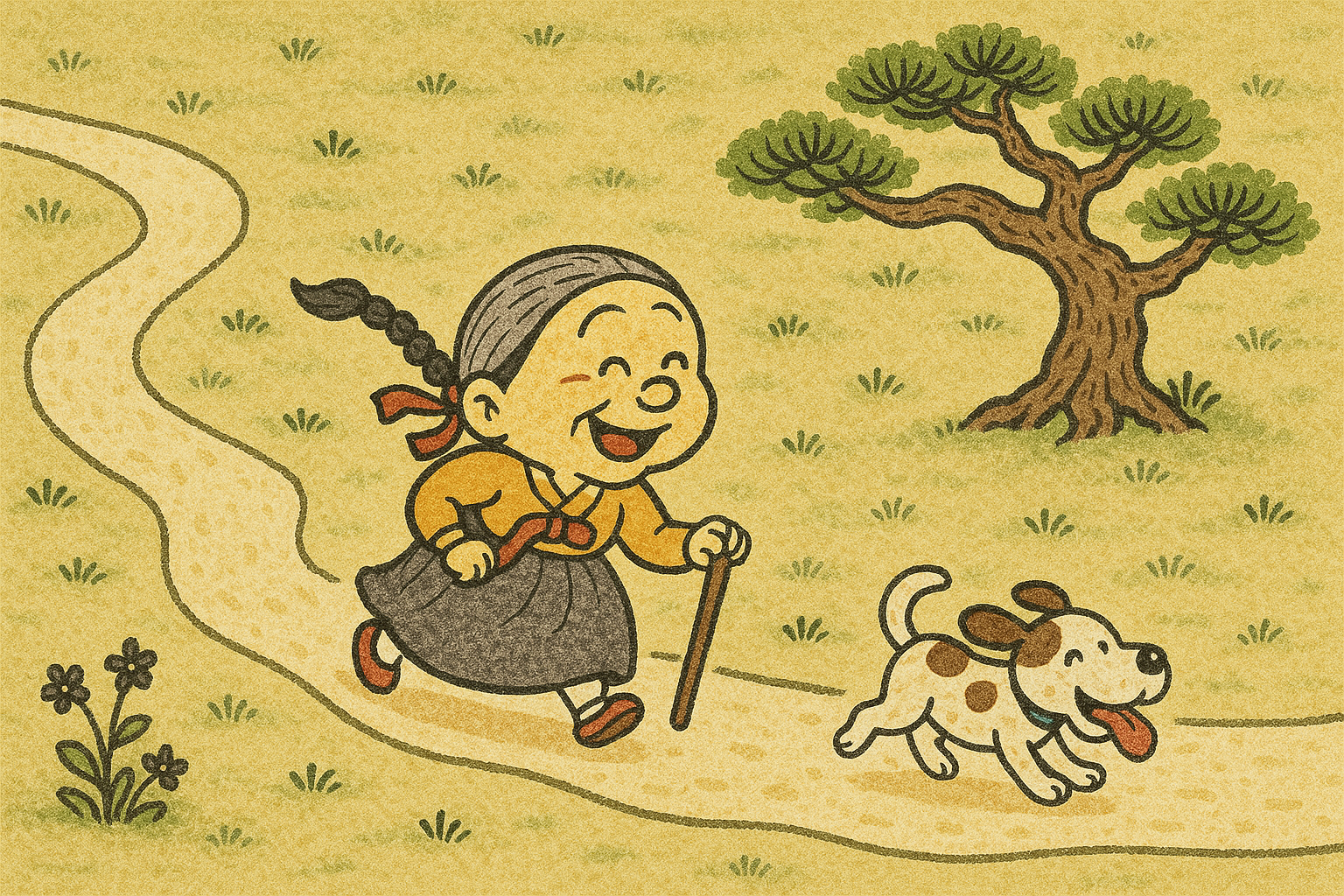
🇰🇷 꼬부랑 할머니가
🇺🇸 A bent-backed grandmother
🇰🇷 꼬부랑 치마를 입고
🇺🇸 Wearing a bent skirt
🇰🇷 꼬부랑 댕기를 드리고
🇺🇸 Wearing a bent ribbon
🇰🇷 꼬부랑 지팡이를 짚고
🇺🇸 Leaning on a bent cane
🇰🇷 꼬부랑 강아지를 데리고
🇺🇸 Taking a bent little puppy
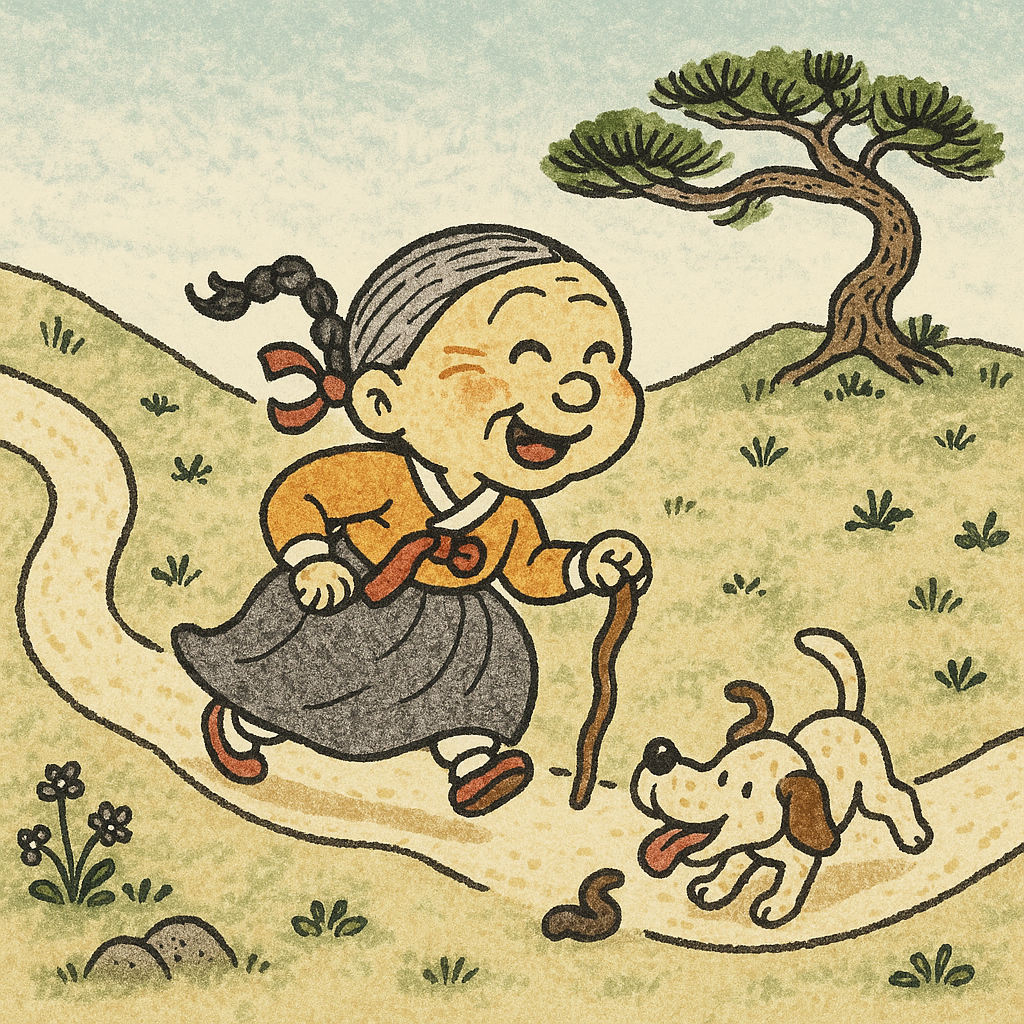
🇰🇷 꼬부랑 길로 가다가
🇺🇸 Walking down a bent road
🇰🇷 꼬부랑 똥이 마려워
🇺🇸 Feeling a bent poop coming
🇰🇷 꼬부랑 나무에 올라가서
🇺🇸 Climbing up a bent tree
🇰🇷 꼬부랑 똥을 눴거든
🇺🇸 She pooped a bent poop
🇰🇷 꼬부랑 똥을 누니까
🇺🇸 As she pooped the bent poop
🇰🇷 꼬부랑 강아지가
🇺🇸 The bent puppy
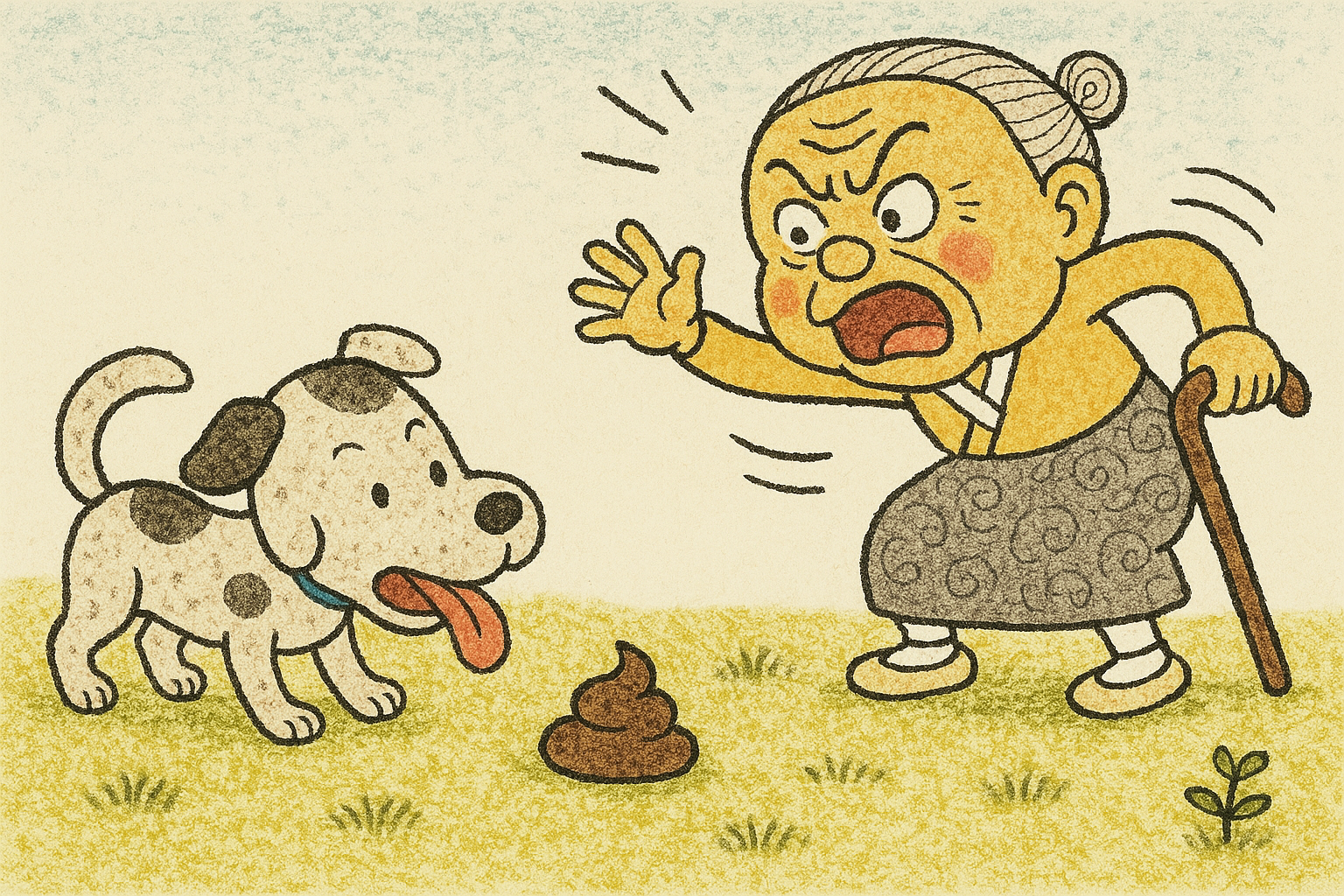
🇰🇷 꼬부랑 똥을 날름 먹어 버리니까
🇺🇸 Quickly licked and ate the bent poop
🇰🇷 꼬부랑 할머니가
🇺🇸 Then the bent grandmother
🇰🇷 꼬부랑 지팡이로 딱 때려 주니까
🇺🇸 Smacked (it) with her bent cane
🇰🇷 꼬부랑 강아지가
🇺🇸 The bent puppy
🇰🇷 꼬부랑 깽깽 꼬부랑 깽깽
🇺🇸 “ Kkoburang Kkaeng-kkaeng,” crying “ Kkoburang Kkaeng-kkaeng”
🇰🇷 네 똥 먹고 천 년 사나 내 똥 먹고 만 년 살지
🇺🇸 “You’ll live a thousand years on your poop, ten thousand years on mine!”
🇰🇷 꼬부랑 깽깽 꼬부랑 깽깽 그러면서 달아났다 그러대
🇺🇸 “ Kkoburang Kkaeng-kkaeng,” crying, and then ran away, they said
👉 반복되는 ‘꼬부랑’(meaning “bent”)과 ‘깽깽’(puppy crying sound)이 운율을 만들며 재미를 줍니다.
“Kkoburang” means bent or hunched, and “kkaeng-kkaeng” mimics a crying puppy sound.

📚
오늘 배울 말은 이거예요
Today’s Vocabulary List
🧓 인물 / 사물 (People & Things)
- 할머니 (halmeoni) = grandmother
- 강아지 (gangaji) = puppy
- 지팡이 (jipangi) = cane
- 치마 (chima) = skirt
- 댕기 (daenggi) = traditional ribbon
💬 동작 (Action Verbs)
- 입다 (ipda) = to wear
- 짚다 (jipda) = to lean on
- 데리다 (derida) = to take along
- 올라가다 (ollagada) = to climb
- 먹다 (meokda) = to eat
- 때리다 (ttaerida) = to hit
✨ 의성어 (Onomatopoeia)
- 깽깽 (kkaeng-kkaeng) = sound of a whining puppy
- 날름 (nalleum) = quickly with the tongue (lick/eat)
💬
가사로 대화해 볼까요?
Let’s Make Conversations from the Lyrics
🇰🇷 A: ‘깽깽’은 무슨 소리예요?
🇺🇸 A: What does “kkaeng-kkaeng” mean?
🇰🇷 B: 강아지가 아플 때 우는 소리를 흉내 낸 거예요.
🇺🇸 B: It imitates the sound a puppy makes when it’s hurt.
💡
살아있는 한국어 팁
Tips for Vivid Korean
🇰🇷 ‘꼬부랑’은 ‘허리가 굽은’이라는 뜻으로, 옛날에는 나이 많은 사람을 묘사할 때 자주 쓰였어요.
🇺🇸 “Kkoburang” means “bent or hunched back,” and was often used to describe elderly people in the past.
🇰🇷 요즘은 실제 사람에게 쓰면 실례가 될 수 있으므로, 옛이야기나 말놀이 안에서만 사용하는 것이 좋아요.
🇺🇸 These days, it can be impolite if used for real people, so it’s better to use it only in old stories or word play.
🎯
활용
Application
🇰🇷 ‘꼬부랑’을 다른 말로 바꿔서 나만의 새로운 버전을 만들어 보세요.
🇺🇸 Try changing “kkoburang” to other descriptive words and create your own version.
예시 Examples
- 반짝반짝 할머니 (sparkly grandmother)
- 팔랑팔랑 강아지 (fluttering puppy)
🧠
이렇게 하면 더 잘 외워져요
Tips to Remember Better
🇰🇷 지팡이를 짚는 동작을 하며 “꼬부랑 지팡이”라고 말해 보세요.
🇺🇸 Pretend to lean on a cane while saying “kkoburang jipangi (bent cane).”
🇰🇷 강아지를 쓰다듬는 제스처를 하며 “꼬부랑 강아지”라고 불러 보세요.
🇺🇸 Make a petting gesture as you say “kkoburang gangaji (bent puppy).”
🇰🇷 허리를 굽히고 걸으며 가사를 따라 불러 보세요.
🇺🇸 Walk with a bent back as you sing along to the lyrics.
🇰🇷 마지막에는 “깽깽~” 하며 손으로 귀를 막고 도망치는 흉내를 내 보세요.
🇺🇸 At the end, cover your ears and pretend to run away crying “kkaeng-kkaeng~.”
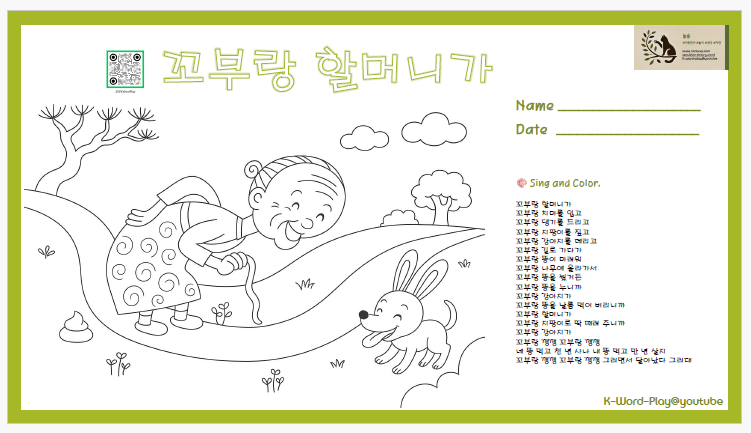
📝활동지 & QR 코드 worksheet download
활동지 다운 받으세요~ 색칠하면서 노래 불러 보세요~
Download the worksheet! 🎨 Sing along while you color!
📱 큐알코드 찍으면 바로 가기!
Scan the QR code to go directly!
더 많은 이야기가 이어질 거예요!
채널 고정!
More to come!
Stay tuned!
@ 서울 사람 Seoul Zian 서울지앵
#말놀이 #WordPlay
#꼬부랑할머니 #KkoburangHalmeoni
#의성어 #Onomatopoeia
#한국어학습 #LearnKorean
#한국문화 #KoreanCulture
#놀이로배우는한국어 #KoreanThroughPlay


