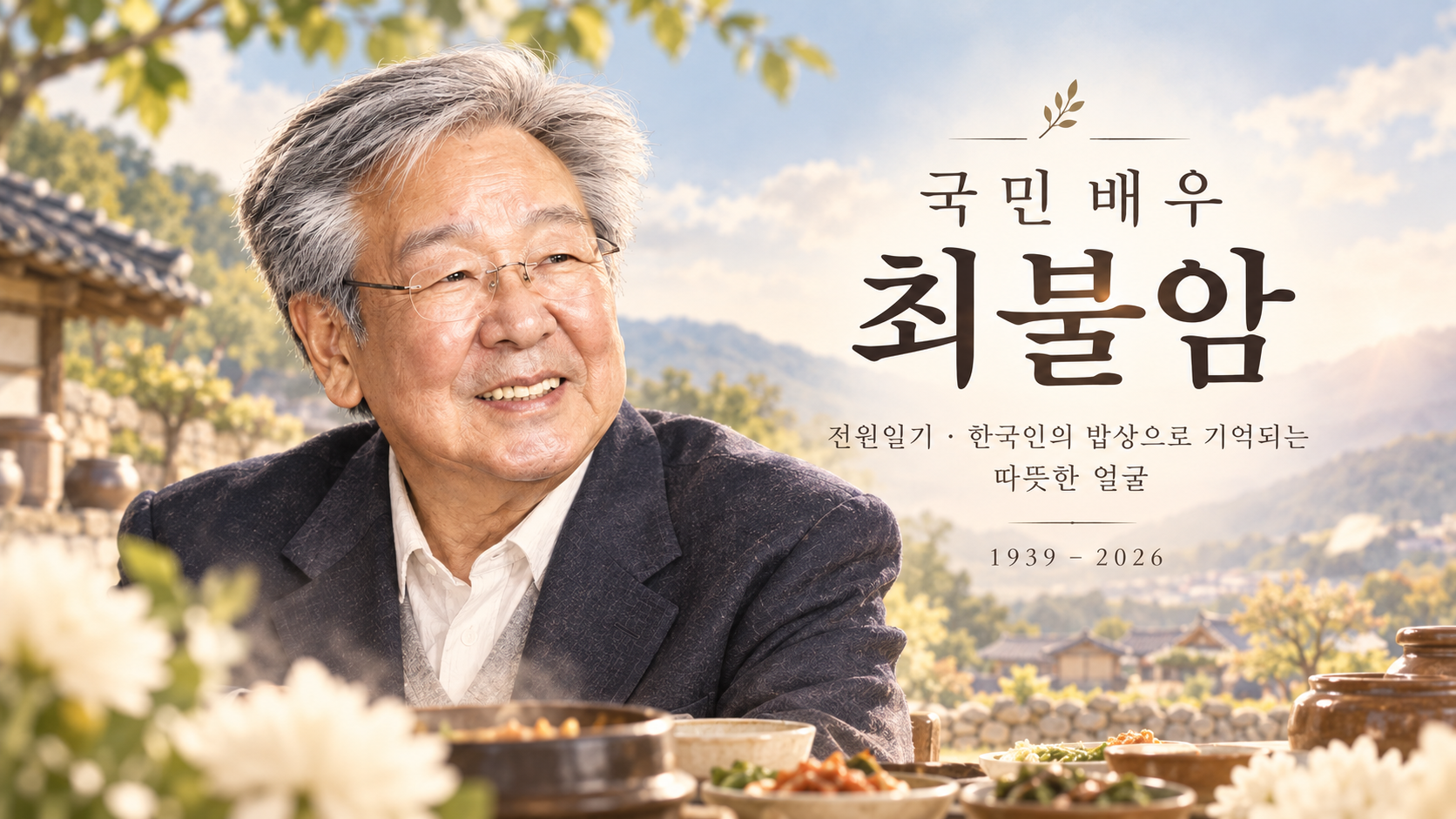
한국인이라면 한 번쯤 얼굴을 보았거나 이름을 들어봤을 배우가 있습니다. 바로 최불암입니다.
There is an actor whose face or name almost every Korean has encountered at least once: Choi Bool-am.
오랫동안 한국의 드라마와 교양 프로그램에 출연하며 많은 사람에게 친숙한 얼굴이 되었지요.
Through decades of television dramas and cultural programs, he became a familiar presence in Korean households.
2026년 10월 29일 밤, 배우 최불암이 향년 87세로 세상을 떠났습니다.
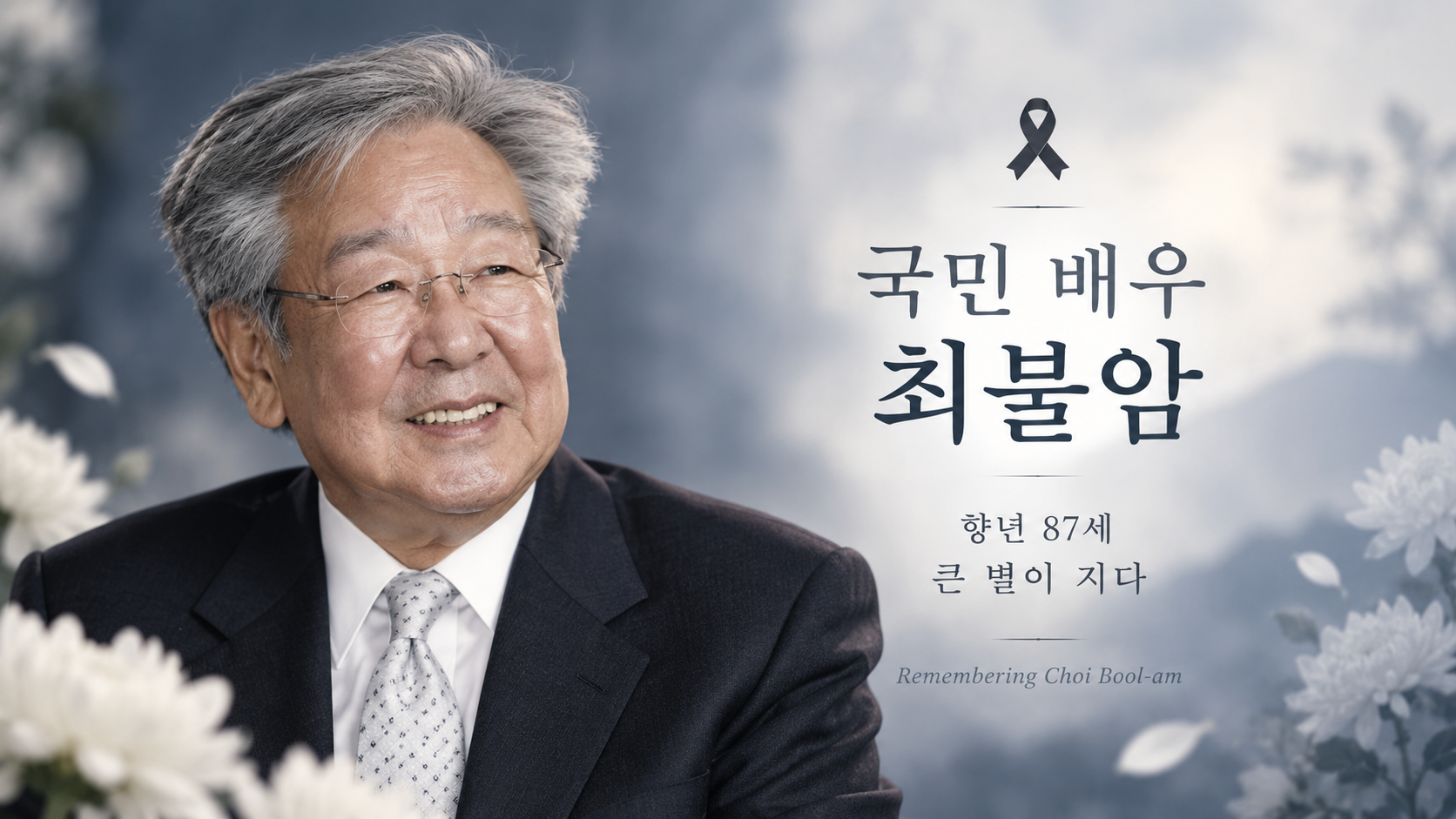
On the night of October 29, 2026, actor Choi Bool-am passed away at the age of 87, as reported in Korean news.
다음 날 한국 언론에는 '국민 배우', '향년 87세', '큰 별이 지다' 같은 표현들이 등장했습니다.
The following day, Korean news reports used expressions such as "nationally beloved actor," "aged 87," and "a great star has fallen."
왜 유명한 배우를 '국민 배우'라고 부를까요? '별세'와 '사망'은 어떻게 다를까요? 사람을 별에 비유하는 이유는 무엇일까요?
Why do Koreans call certain celebrities "national actors"? What is the difference between byeolse and samang? And why is a famous person sometimes compared to a star?
오늘은 최불암 배우를 추모하며 한국 뉴스와 일상에서 사용하는 표현들을 배워 보겠습니다.
Today, as we remember Choi Bool-am, let's explore Korean expressions used in news reports, everyday speech, and messages of remembrance.
1. 최불암은 누구인가요? | Who Was Choi Bool-am?
최불암(1939~2026)은 한국의 대표적인 배우이자 방송인입니다. 1959년 연극 무대에 데뷔한 뒤 오랜 세월 드라마, 영화, 교양 프로그램에서 활동했습니다.
Choi Bool-am (1939–2026) was one of South Korea's most recognized actors and television personalities. After making his stage debut in 1959, he worked in television, film, and cultural programming for decades.
수사반장 | Chief Inspector
1971년부터 1989년까지 방영된 범죄 수사 드라마입니다. 최불암은 박영한 반장 역을 맡아 정의롭고 인간적인 형사의 모습을 보여주었습니다.
This crime investigation drama aired from 1971 to 1989. Choi played Inspector Park Young-han, a police officer remembered for his sense of justice and humanity.
전원일기 | Country Diaries
1980년부터 2002년까지 방송된 한국의 대표적인 장수 드라마입니다. 최불암은 농촌 마을의 김 회장 역을 맡아 따뜻하고 책임감 있는 아버지의 모습을 보여주었습니다.
A long-running Korean family drama broadcast from 1980 to 2002, Country Diaries depicted life in a rural village. Choi portrayed Chairman Kim, a father figure associated with warmth, responsibility, and traditional family values.
한국인의 밥상 | Korean Food Table
2011년부터 오랫동안 진행한 교양 프로그램으로, 한국 각 지역의 음식과 그 안에 담긴 사람들의 삶을 소개했습니다.
Beginning in 2011, Choi hosted a documentary-style food program exploring regional Korean dishes and the people, traditions, and memories behind them.
그렇기 때문에 많은 한국인은 그를 단순히 유명한 배우가 아니라 '국민 배우', '국민 아버지'로 기억합니다.
For this reason, many Koreans remember him not merely as a famous actor but as a "nationally beloved actor" and a "father figure to the nation."
2. 국민 배우란? | What Does 국민 배우 Mean?
국민 + 배우
Literally, "the people's actor" or "national actor."
많은 사람에게 널리 알려지고 오랫동안 사랑받으며 국민적인 친근함과 신뢰를 얻은 배우를 뜻합니다.
An actor widely recognized and loved by the public over many years, often associated with familiarity, affection, and trust.
'국민 배우'는 정부가 공식적으로 부여하는 직함이 아닙니다. 대중과 언론이 폭넓은 사랑과 인지도를 표현하기 위해 사용하는 말입니다.
"National actor" is not an official government title. It is a popular expression used by the public and media to describe someone with widespread recognition and affection.
최불암은 오랜 세월 국민 배우로 사랑받았다.
Choi Bool-am was beloved as a national actor for many years.
국민 ○○ | The "Nation's..." Expression
국민 배우 — 많은 국민에게 사랑받는 배우
A nationally beloved actor.
국민 가수 — 여러 세대에 걸쳐 사랑받는 가수
A singer loved across generations.
국민 MC — 많은 시청자에게 친숙한 방송 진행자
A widely beloved television host.
국민 여동생 — 친근하고 사랑스러운 이미지로 알려진 여성 연예인
A female celebrity affectionately known as "the nation's little sister."
국민 엄마 — 어머니 역할로 대중에게 친숙한 배우
An actress famous for portraying mother figures.
국민 간식 — 많은 사람이 즐겨 먹는 대중적인 간식
A snack widely enjoyed across the country.
국민 음식 — 국민에게 친숙하고 사랑받는 음식
A food commonly loved and recognized nationwide.
떡볶이는 한국의 국민 간식 중 하나예요.
Tteokbokki is one of Korea's most popular and beloved snacks.
'국민'이라는 표현이 모든 국민이 실제로 좋아한다는 뜻은 아닙니다. 사회적으로 널리 알려져 있고 대중적인 친근함을 얻었다는 의미에 가깝습니다.
The expression does not mean that every single citizen likes the person or product. It emphasizes broad popularity and cultural familiarity.
3. 별세와 향년 | Passing Away & Age at Death
별세하다 (別世하다) | To Pass Away
'별세하다'는 사람이 세상을 떠났다는 사실을 정중하고 격식 있게 나타내는 표현입니다.
Byeolseh ada is a respectful and relatively formal expression meaning "to pass away."
사회적으로 알려진 인물이나 존경받는 사람의 죽음을 뉴스에서 보도할 때 자주 사용합니다.
It frequently appears in news reports about public figures or respected individuals.
원로 배우 최불암이 별세했다.
Veteran actor Choi Bool-am has passed away.
향년 (享年) | Age at Death
'향년'은 사람이 세상을 떠났을 때의 나이를 나타내며, 주로 부고 기사나 추모 글에서 사용합니다.
Hyangnyeon is a formal word introducing a person's age at death. It is commonly used in obituaries and memorial articles.
최불암 별세, 향년 87세.
Choi Bool-am passes away at 87.
잘못된 표현 | Incorrect
우리 할머니는 향년 85세이세요.
My grandmother is 85 years old. (Incorrect use of 향년 for someone living.)
자연스러운 표현 | Natural
우리 할머니는 올해 85세이세요.
My grandmother is 85 years old this year.
'향년'은 살아 있는 사람의 나이를 말할 때 사용하지 않습니다. 또한 뉴스에서 사용하는 나이 표기 방식과 만 나이는 다를 수 있으므로 생년월일과 사망일을 확인해야 합니다.
Hyangnyeon is not used for living people. Also, reported ages may follow different conventions, so checking birth and death dates is important when determining an exact age.
87세를 일기로 | Ending One's Life at 87
'87세를 일기로 세상을 떠났다'는 표현도 부고 기사에 자주 나옵니다. 여기서 '일기'는 매일 쓰는 일기장이 아니라 한평생의 생애를 마쳤다는 의미입니다.
The expression "87세를 일기로 세상을 떠났다" means that someone passed away at 87. Here, 일기 is a formal obituary expression, not the everyday word for a personal diary.
4. 죽음을 나타내는 한국어 | Korean Words for Death
한국어에는 '죽다' 외에도 죽음을 나타내는 표현이 많습니다. 누구에 대해 말하는지, 어떤 상황인지, 얼마나 격식을 차려야 하는지에 따라 알맞은 단어가 달라집니다.
Korean has many expressions for death beyond the basic verb 죽다. The appropriate choice depends on who is being discussed, the situation, and the required level of respect or formality.
죽다 | To Die
가장 기본적인 표현으로 사람, 동물, 식물 모두에게 사용할 수 있습니다. 사람에게 직접 사용하면 상황에 따라 다소 거칠게 들릴 수 있습니다.
The most basic verb, used for people, animals, and plants. When referring to a person, it can sometimes sound blunt.
그 나무는 물이 부족해서 죽었어요.
The tree died because it did not get enough water.
돌아가시다 | To Pass Away (Honorific)
사람의 죽음을 높여 말하는 표현입니다. 가족 어른이나 존중하는 사람에 대해 말할 때 매우 자연스럽습니다.
A respectful honorific expression for a person's death, especially natural when speaking about older family members or respected people.
할아버지께서 어젯밤 돌아가셨어요.
My grandfather passed away last night.
세상을 떠나다 | To Leave This World
죽음을 부드럽고 완곡하게 표현하는 말입니다. 뉴스, 일상 대화, 추모 글에서 두루 사용합니다.
A gentle, indirect expression meaning "to leave this world." It is used in news, conversation, and memorial writing.
그는 가족들의 사랑 속에서 세상을 떠났습니다.
He passed away surrounded by the love of his family.
사망하다 (死亡하다) | To Die / Death Occurred
죽음이라는 사실을 객관적으로 전달하는 표현입니다. 사고 보도, 의료 기록, 행정 문서 등에서 자주 사용합니다.
A formal, factual expression for death, frequently used in accident reports, medical records, and official documents.
사고로 두 명이 사망했습니다.
Two people died in the accident.
숨지다 | To Lose One's Life
사고, 재난, 사건 관련 뉴스에서 목숨을 잃었다는 사실을 간결하게 전달할 때 자주 사용합니다.
Often used in news reports when someone has lost their life in an accident, disaster, or other incident.
화재로 한 명이 숨졌습니다.
One person died in the fire.
별세하다 (別世하다) | To Pass Away
공인이나 존경받는 사람의 죽음을 정중하게 전할 때 사용합니다.
A respectful formal expression commonly used for the passing of a public figure or respected person.
원로 배우가 별세했습니다.
The veteran actor has passed away.
타계하다 (他界하다) | To Pass Away
문자 그대로는 '다른 세계로 가다'라는 의미입니다. 존경받는 인물의 죽음을 격식 있게 표현할 때 사용합니다.
Literally meaning "to go to another world," this is a formal, respectful expression often used for distinguished individuals.
세계적인 음악가가 타계했습니다.
The internationally renowned musician has passed away.
작고하다 (作故하다) | To Be Deceased
주로 작가, 예술가, 학자 등 이미 세상을 떠난 인물의 생애를 소개할 때 사용합니다.
Often used in biographical writing about deceased writers, artists, scholars, and other notable figures.
그 소설가는 1990년에 작고했습니다.
The novelist passed away in 1990.
서거하다 (逝去하다) | To Pass Away (Highly Honorific)
대통령이나 국가적으로 중요한 지도자 등 매우 높은 지위에 있던 인물의 죽음을 높여 표현할 때 주로 사용합니다.
A highly respectful expression most often used for presidents, national leaders, and similarly prominent figures.
전직 대통령이 서거했습니다.
The former president has passed away.
소천하다 (召天하다) | To Be Called to Heaven
주로 한국 개신교 문화에서 사용하는 종교적인 표현입니다.
A religious expression mainly used in Korean Protestant Christian communities, meaning "to be called to heaven."
목사님께서 소천하셨습니다.
The pastor has passed away.
영면하다 (永眠하다) | To Rest Eternally
'영원히 잠들다'라는 뜻으로, 죽음을 평화롭고 서정적으로 표현합니다.
Literally "to sleep eternally," this expression conveys death in a peaceful, poetic, or commemorative tone.
오랜 투병 끝에 영면했습니다.
The person passed away peacefully after a long illness.
일상에서 가족의 죽음을 말할 때는 '돌아가시다', 일반적인 정중한 표현으로는 '세상을 떠나다', 사건·사고 뉴스에서는 '사망하다'나 '숨지다'가 자주 사용됩니다.
For a family member, 돌아가시다 is often appropriate. 세상을 떠나다 is a gentle general expression, while 사망하다 and 숨지다 frequently appear in factual reports about accidents or incidents.
5. 큰 별이 지다 | A Great Star Has Fallen
큰 별이 지다 | A Great Star Has Fallen
한국어에서는 한 분야에서 오랫동안 큰 업적을 남긴 사람을 '큰 별'에 비유합니다.
In Korean, a person who has made an outstanding contribution to a field may be metaphorically described as a "great star."
밤하늘을 밝히던 별이 사라지는 것처럼, 사회적으로 큰 영향력을 남긴 사람이 세상을 떠났다는 의미입니다.
Just as a bright star disappears from the night sky, the expression conveys the loss of someone whose presence had a major influence on society.
해가 지다.
The sun sets.
달이 지다.
The moon sets.
한국 방송계의 큰 별이 지다.
A great star of Korean broadcasting has fallen.
'큰 별이 지다'는 실제 별에 관한 이야기가 아니라, 한 인물의 죽음을 애도하는 비유적인 표현입니다.
"A great star has fallen" is not a literal astronomical statement. It is a figurative expression of grief and respect for a prominent person who has died.
별이 되다 | To Become a Star
'별이 되다'는 떠난 사람이 하늘의 별처럼 우리의 기억 속에 남아 있다는 느낌을 전합니다.
"To become a star" suggests that a person who has passed away continues to shine in the memories of those left behind.
그는 하늘의 별이 되었다.
He became a star in the sky.
우리 마음속에 영원한 별로 남을 것이다.
He will remain a shining star in our hearts forever.
'큰 별이 지다'가 사회적인 상실에 초점을 맞춘다면, '별이 되다'는 기억과 그리움이라는 정서를 더 강하게 전달합니다.
While "a great star has fallen" emphasizes society's loss, "to become a star" places greater emphasis on remembrance and affection.
6. 애도, 추모, 조문, 명복 | Expressing Condolences
애도하다 (哀悼하다) | To Mourn
사람의 죽음을 슬퍼하는 것입니다.
To feel or express sorrow over someone's death.
많은 시민이 고인의 죽음을 애도했습니다.
Many citizens mourned the deceased person's passing.
추모하다 (追慕하다) | To Commemorate
세상을 떠난 사람을 기억하고 그리워하며 기리는 것입니다.
To remember and honor someone who has passed away.
팬들이 배우의 연기 인생을 추모했습니다.
Fans commemorated the actor's life and career.
조문하다 (弔問하다) | To Pay Condolence Visits
장례식장이나 빈소를 찾아가 고인을 기리고 유족을 위로하는 것입니다.
To visit a funeral hall or mourning place to pay respects to the deceased and offer condolences to the bereaved family.
동료 배우들이 빈소를 찾아 조문했습니다.
Fellow actors visited the funeral hall to pay their respects.
삼가 고인의 명복을 빕니다 | May the Deceased Rest in Peace
삼가 — 조심스럽고 공손하게
Respectfully and with solemn care.
고인 (故人) — 세상을 떠난 사람
The deceased.
명복 (冥福) — 죽은 뒤의 복
Blessings or peace in the afterlife.
빌다 — 바라는 마음을 나타내다
To wish or pray for something.
'삼가 고인의 명복을 빕니다'는 한국의 부고 게시물과 추모 댓글에서 매우 흔히 볼 수 있는 표현입니다.
"삼가 고인의 명복을 빕니다" is one of the most common messages found in Korean obituary notices and online condolences.
종교적인 배경이나 개인의 신념에 따라 다른 표현을 사용하기도 합니다.
People may also choose other condolence messages depending on their religious background or personal beliefs.
깊은 애도를 표합니다.
I express my deepest condolences.
유가족께 위로의 말씀을 전합니다.
I offer my condolences to the bereaved family.
편히 쉬시길 바랍니다.
May you rest in peace.
7. 한국 뉴스 제목 읽기 | Reading Korean Headlines
이제 오늘 배운 표현을 실제 한국 뉴스에서 볼 법한 제목으로 연결해 보겠습니다.
Now let's put these expressions together in headline-style examples similar to those found in Korean news reports.
① 국민 배우 최불암 별세
Beloved national actor Choi Bool-am passes away.
많은 한국인에게 사랑받던 배우가 세상을 떠났다는 뜻입니다.
The headline reports the death of a widely admired actor.
② 국민 아버지, 향년 87세
The nation's father figure dies at 87.
오랫동안 아버지 역할로 친숙했던 배우의 나이와 죽음을 함께 전달합니다.
It combines the actor's familiar fatherly public image with his reported age at death.
③ 한국 방송계의 큰 별이 지다
A great star of Korean broadcasting has fallen.
방송계에서 큰 영향력을 가진 인물의 죽음을 비유적으로 애도하는 표현입니다.
A metaphorical expression mourning a major figure in the broadcasting industry.
④ 67년 연기 인생의 마침표
The final chapter of a 67-year acting career.
'마침표를 찍다'라는 표현을 활용하여 오랜 연기 인생의 끝을 나타냅니다.
The metaphor of placing a final period marks the conclusion of a long career.
⑤ 영원한 수사반장, 하늘의 별이 되다
The eternal Chief Inspector becomes a star in the sky.
대표적인 드라마 속 인물의 이미지를 떠올리며 배우를 추모하는 표현입니다.
The headline recalls the actor's most iconic television role while expressing affectionate remembrance.
뉴스 제목은 짧지만 사실 전달뿐 아니라 감정, 문화, 존중의 표현 방식까지 담고 있습니다.
Korean headlines may be brief, but they often communicate not only facts but also emotion, cultural references, and respect.
8. 오늘의 한국어 복습 | Korean Review Quiz
Q1. '국민 배우'는 단순히 한국 국적의 배우를 뜻할까요?
Does 국민 배우 simply mean an actor who has Korean nationality?
Q2. '향년 87세'는 살아 있는 사람에게 사용할 수 있을까요?
Can 향년 87세 be used for someone who is still alive?
Q3. '큰 별이 지다'는 어떤 사람에게 주로 사용할까요?
What kind of person is usually described by the phrase 큰 별이 지다?
Q4. '조문하다'와 '추모하다'는 어떻게 다를까요?
What is the difference between 조문하다 and 추모하다?
Q5. 가족 어른의 죽음을 정중하게 말할 때 어떤 표현이 자연스러울까요?
Which expression is natural when respectfully referring to the death of an older family member?
정답과 해설 | Answers & Explanations
1. 아닙니다. 널리 알려지고 많은 사람에게 사랑받는 배우를 뜻합니다.
No. It means an actor with widespread public recognition and affection.
2. 아닙니다. '향년'은 사망한 사람의 나이를 나타냅니다.
No. 향년 is used for a person's age at death.
3. 한 분야에 큰 공헌을 한 인물이나 사회적으로 존경받는 인물에게 주로 사용합니다.
It is commonly used for a highly respected figure who made major contributions to a field.
4. 조문은 빈소 등을 방문해 애도를 표하는 행동이고, 추모는 고인을 기억하고 기리는 것입니다.
조문 refers to paying condolences, often through a funeral visit, while 추모 refers to remembering and honoring the deceased.
5. '돌아가시다'가 자연스럽습니다.
돌아가시다 is a natural and respectful choice.
9. 한 배우를 기억하며 | Remembering an Actor
최불암은 한국인에게 단순히 오랫동안 활동한 유명 배우 이상의 존재였습니다.
To many Koreans, Choi Bool-am was more than a famous actor with a long career.
어떤 사람에게는 『수사반장』의 정의로운 형사였고, 어떤 사람에게는 『전원일기』의 따뜻한 아버지였으며, 또 다른 사람에게는 『한국인의 밥상』에서 전국의 음식과 사람을 찾아다니던 친근한 이야기꾼이었습니다.
For some, he was the principled detective in Chief Inspector. For others, he was the warm father in Country Diaries. For still others, he was the familiar storyteller who traveled across Korea to discover food and the lives behind it in Korean Food Table.
그래서 그의 별세 소식에 '국민 배우', '국민 아버지', '큰 별'이라는 표현이 등장하는 것이겠지요.
That helps explain why expressions such as "national actor," "the nation's father figure," and "a great star" appear in tributes to him.
한국어에는 사람의 죽음을 표현하는 말이 많습니다. 그 말들을 배우다 보면 한국인이 존중과 슬픔, 그리움과 추모의 마음을 어떻게 표현하는지도 이해하게 됩니다.
Korean has many ways of talking about death. Learning these expressions helps us understand how Koreans communicate respect, sadness, affection, and remembrance.
오늘은 한 시대를 함께한 배우를 기억하며, 한국어에 담긴 존중과 애도의 언어를 살펴보았습니다.
Today, in remembering an actor who was part of Korean life for generations, we have explored the language of respect and mourning in Korean culture.
삼가 고인의 명복을 빕니다.
May he rest in peace.
참고 자료 | References
연합뉴스 (Yonhap News Agency), 2026.10.30.
'영원한 수사반장'·'국민 아버지' 최불암 별세…향년 87세
연합뉴스 (Yonhap News Agency), 2026.10.30.
[연보] '국민 아버지' 배우 최불암
뉴스1 (News1), 2026.10.30.
'국민배우' 최불암, 87세 별세…67년 연기 인생
이 글의 표현 설명과 영어 번역은 한국어 학습을 위해 별도로 작성했습니다.
The language explanations and English translations were prepared independently for Korean learners.
'진짜 한국어 Real Korean' 카테고리의 다른 글
| 영크크·늙크크 뜻은?|Young KK vs Old KK|Korean Slang (0) | 2026.10.21 |
|---|---|
| 한식의 날이란?|What Is Hansik Day?|Korean Food Culture (0) | 2026.10.21 |
| 한복의 날이란?|What Is Hanbok Day?|Korean Culture (0) | 2026.10.21 |
| 아이 한글 교재, 꼭 사야 할까요?|무료 한글 교재 ‘한글 재미 퐁당’ 추천 (0) | 2026.10.05 |
| 한글은 어떻게 만들어졌을까요?|How Was Hangeul Created?|훈민정음과 해례본 (0) | 2026.10.04 |


