🎵 가나다라 노래|한글 글자들이 뛰고 놀아요!
🎵 Ga Na Da Song|Learn Korean Letters Through Rhythm and Play
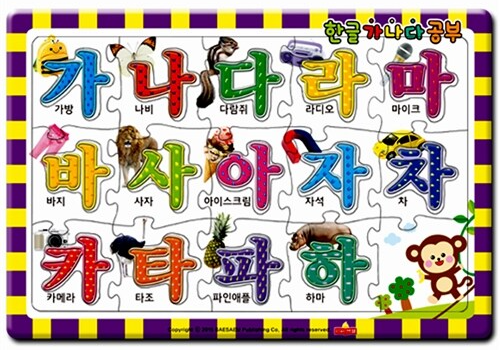
가나다라 마바사아 자차카타 파하!
한국 아이들이 한글의 기본 자음 순서를 익힐 때 한 번쯤 소리 내어 말해 보는 익숙한 리듬입니다.
Ga-na-da-ra, ma-ba-sa-a, ja-cha-ka-ta, pa-ha!
This simple rhythmic sequence is a familiar way for Korean children to become comfortable with the basic order of Korean consonant sounds.
이번 K-Word Play 가나다라 노래에서는 글자를 외우는 공부보다 먼저, 아이들이 한글의 소리와 리듬을 즐겁게 경험할 수 있도록 가나다라를 노래로 구성했습니다.
In this K-Word Play Ga Na Da Song, the goal is not simply to memorize letters. Children first experience the sounds, rhythm, and playful patterns of Hangul through music.
📘 가나다라 노래란?
What Is the “Ga Na Da Song”?
한국어의 기본 자음은 다음과 같은 순서로 배웁니다.
Korean basic consonants are commonly introduced in the following order:
ㄱ ㄴ ㄷ ㄹ ㅁ ㅂ ㅅ ㅇ ㅈ ㅊ ㅋ ㅌ ㅍ ㅎ
이 자음들에 모음 ㅏ(a)를 붙이면 아이들이 말하기 쉬운 소리 형태가 됩니다.
When the vowel ㅏ (a) is added to each consonant, the letters become easy-to-pronounce syllables:
가 나 다 라
마 바 사 아
자 차 카 타
파 하
ga na da ra
ma ba sa a
ja cha ka ta
pa ha
그래서 어린아이들은 복잡한 글자 이름을 먼저 외우기보다
“가나다라 마바사아 자차카타 파하”
처럼 리듬을 타며 한글의 자음 순서를 자연스럽게 익힐 수 있습니다.
Instead of memorizing abstract letter names first, young learners can say and sing
“Ga-na-da-ra, ma-ba-sa-a, ja-cha-ka-ta, pa-ha”
and gradually become familiar with the order and sounds of Korean consonants.
🎵 가나다라 노래 가사
Ga Na Da Song Lyrics
가나다라 가락 타고 걸어가요
Ga-na-da-ra, walk along with the melody.
마바사아 마당에서 놀아 봐요
Ma-ba-sa-a, come and play in the yard.
자차카타 장단 맞춰 따라 해요
Ja-cha-ka-ta, follow along with the rhythm.
파하 파하 하하하 웃어 봐요
Pa-ha, pa-ha, laugh together—ha ha ha!
가나다라 마바사아
Ga-na-da-ra, ma-ba-sa-a
자차카타 파하
Ja-cha-ka-ta, pa-ha
입으로 또박또박
Say each sound clearly.
손뼉으로 짝짝짝
Clap your hands—clap, clap, clap!
가나다라 마바사아
Ga-na-da-ra, ma-ba-sa-a
자차카타 파하
Ja-cha-ka-ta, pa-ha
가나다라 마바사아
Ga-na-da-ra, ma-ba-sa-a
자차카타 파하
Ja-cha-ka-ta, pa-ha
가나다라 마바사아
Ga-na-da-ra, ma-ba-sa-a
자차카타 파하
Ja-cha-ka-ta, pa-ha
말놀이 소리놀이
Word play, sound play,
한글 소리놀이
playing with the sounds of Hangul.
가나다라 파하하!
Ga-na-da-ra, pa-ha-ha!
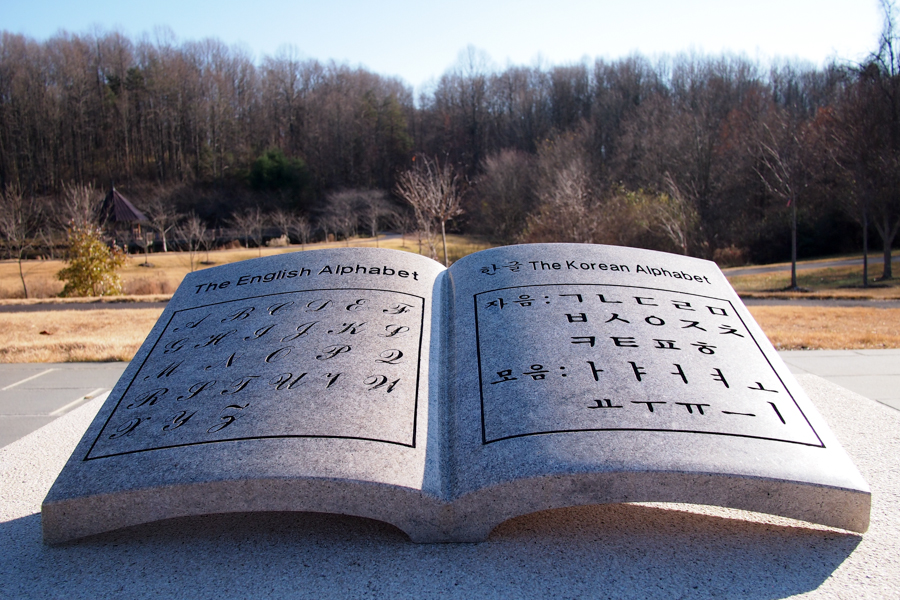
🔤 가나다라에는 어떤 한글 자음이 숨어 있을까요?
Which Korean Consonants Are Hidden in “Ga Na Da”?
‘가나다라’는 단순한 네 개의 단어가 아닙니다.
“Ga-na-da-ra” is more than a catchy series of sounds.
각 음절의 첫소리를 살펴보면 한글 자음의 순서가 보입니다.
Look at the first sound of each syllable, and you can see the Korean consonant sequence.
가 → ㄱ
나 → ㄴ
다 → ㄷ
라 → ㄹ
마 → ㅁ
바 → ㅂ
사 → ㅅ
아 → ㅇ
자 → ㅈ
차 → ㅊ
카 → ㅋ
타 → ㅌ
파 → ㅍ
하 → ㅎ
즉,
가나다라 마바사아 자차카타 파하
는 기본 자음 14개에 ㅏ 소리를 붙여 만든 재미있는 한글 소리 배열입니다.
In other words,
Ga-na-da-ra, ma-ba-sa-a, ja-cha-ka-ta, pa-ha
is a playful sound sequence created by combining the 14 basic Korean consonants with the vowel ㅏ (a).
✨ 왜 ‘아’에는 자음이 없는 것처럼 보일까요?
Why Does “아” Look Like It Has No Consonant Sound?
한글에서 모음은 글자를 쓸 때 혼자 사용되지 않습니다.
In written Korean, a vowel normally needs a consonant position in front of it.
그래서 ㅏ만 소리 내고 싶을 때는 소리가 없는 자음 ㅇ을 앞에 붙여
ㅇ + ㅏ = 아
라고 씁니다.
So when we want to write the vowel sound ㅏ (a) by itself, we place the silent consonant ㅇ in front of it:
ㅇ + ㅏ = 아
여기서 음절 첫머리의 ㅇ은 소리가 나지 않습니다.
At the beginning of a syllable, ㅇ is silent.
그래서
사 → ㅅ
아 → ㅇ
의 순서가 되는 것입니다.
That is why the sequence includes:
사 → ㅅ
아 → ㅇ
🎨 한국 문화 속 ‘마당’과 ‘장단’
Korean Cultural Words: Madang and Jangdan
이번 노래에는 한글뿐 아니라 한국적인 단어도 자연스럽게 들어 있습니다.
The song also introduces a few words connected with traditional Korean culture.
🏡 마당 (madang)
마당은 전통 한옥이나 집 앞에 있는 넓은 공간을 말합니다.
A madang is an open yard or courtyard often found in traditional Korean homes.
예전에는 아이들이 마당에서 뛰어놀고, 가족들이 일을 하거나 이웃들과 이야기를 나누기도 했습니다.
In the past, children played there, families worked there, and neighbors often gathered and talked together.
그래서 노래의
“마바사아 마당에서 놀아 봐요”
라는 표현은 한글 글자들이 한국의 옛 마당에서 함께 뛰노는 모습을 떠올리게 합니다.
That is why the line
“Ma-ba-sa-a, come and play in the yard”
creates the image of little Hangul letters happily playing together in a traditional Korean courtyard.
🥁 장단 (jangdan)
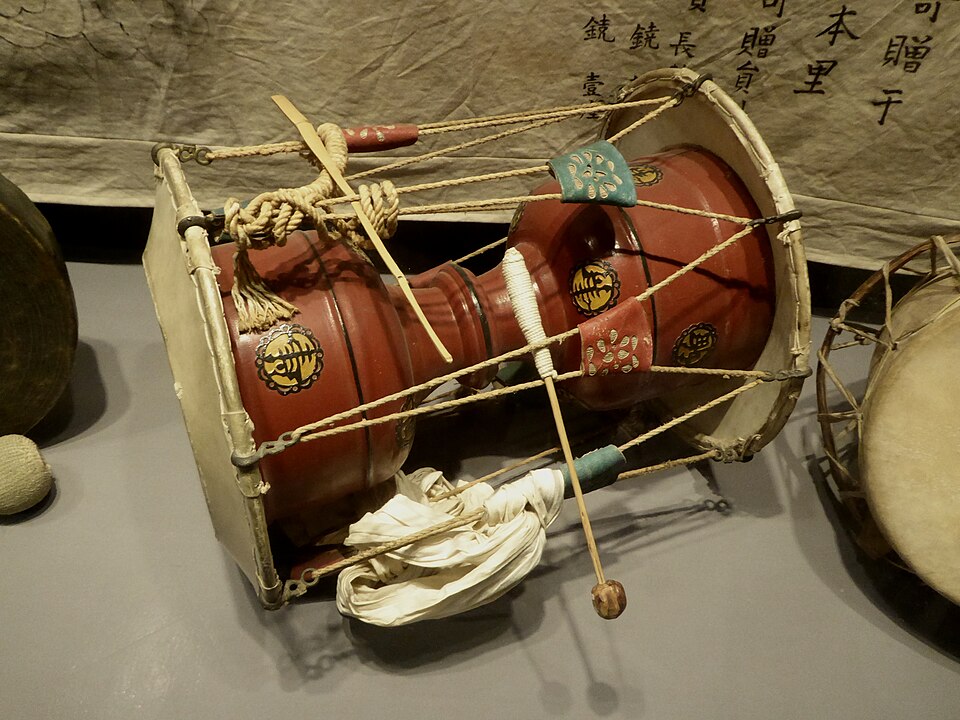
장단은 한국 전통 음악에서 반복되는 리듬의 틀을 뜻합니다.
Jangdan refers to rhythmic patterns used in traditional Korean music.
노래에서
“자차카타 장단 맞춰 따라 해요”
라고 하는 것은 단순히 글자를 읽는 것이 아니라 박자에 맞춰 소리를 따라 해 보자는 뜻입니다.
The line
“Ja-cha-ka-ta, follow along with the jangdan”
invites children not only to read the letters but also to feel and repeat the sounds in rhythm.
👏 한글은 소리 내어 배워 보세요
Learn Hangul Out Loud
어린아이가 한글을 처음 배울 때는 글자 모양만 계속 보여 주는 것보다
보고 → 듣고 → 말하고 → 몸으로 따라 하는 활동
을 함께 하는 것이 좋습니다.
When young children first encounter Hangul, it can be helpful to combine several kinds of learning:
see → listen → say → move
예를 들어 가나다라 노래를 부르면서 이렇게 해 볼 수 있습니다.
For example, try these activities while singing the Ga Na Da Song:
가나다라 → 무릎 치기
Ga-na-da-ra → tap your knees
마바사아 → 손뼉 치기
Ma-ba-sa-a → clap your hands
자차카타 → 양손 흔들기
Ja-cha-ka-ta → wave both hands
파하 → 크게 웃기
Pa-ha → finish with a big laugh
소리와 동작이 함께하면 아이들은 한글을 ‘공부해야 하는 문자’가 아니라 가지고 놀 수 있는 소리로 먼저 만나게 됩니다.
When sounds and movements are combined, children can experience Hangul not simply as letters they must study, but as sounds they can play with.
🧩 미니 한국어 레슨
Mini Korean Lesson
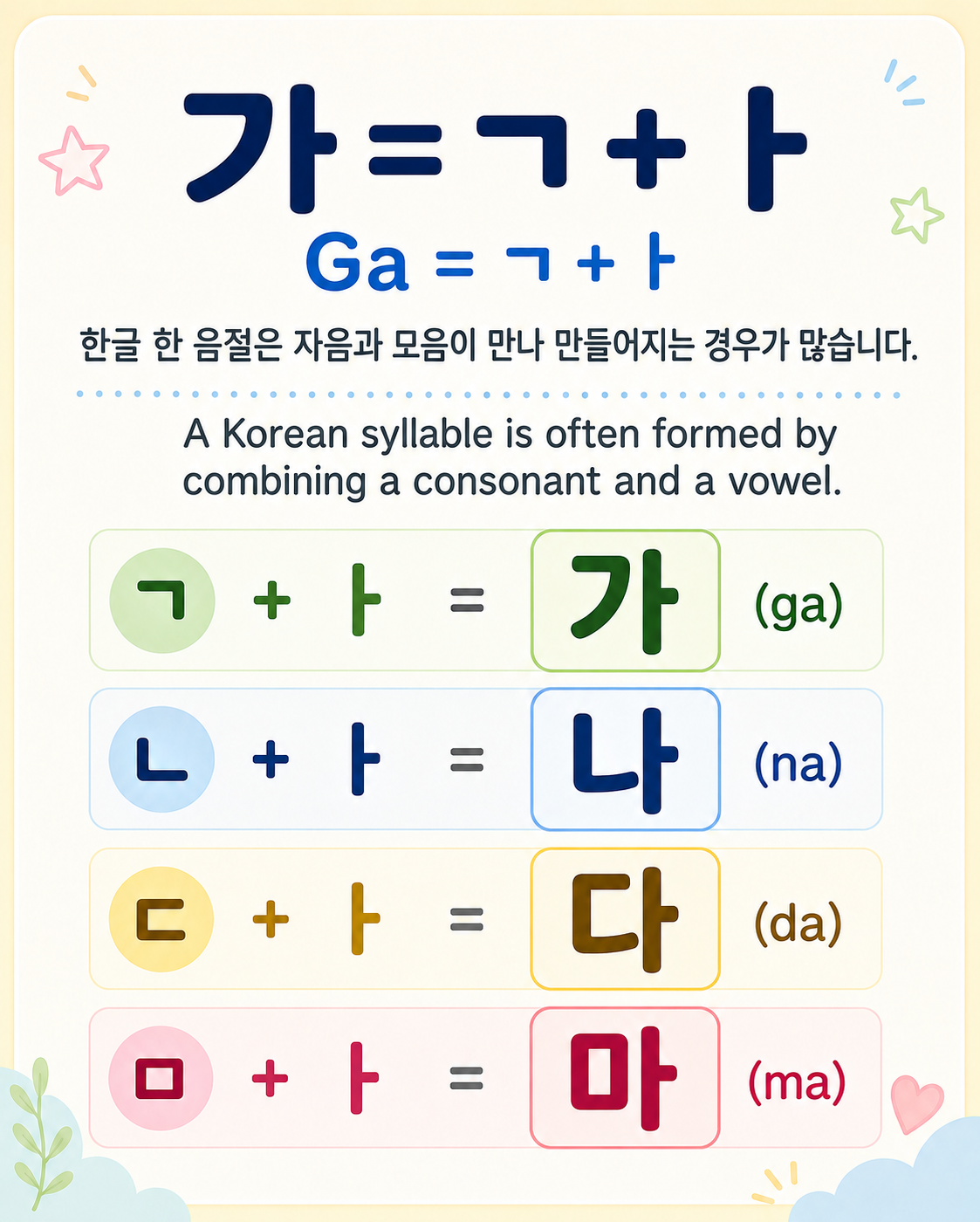
🔎 1) 가 = ㄱ + ㅏ
Ga = ㄱ + ㅏ
한글 한 음절은 자음과 모음이 만나 만들어지는 경우가 많습니다.
A Korean syllable is often formed by combining a consonant and a vowel.
ㄱ + ㅏ = 가 (ga)
ㄴ + ㅏ = 나 (na)
ㄷ + ㅏ = 다 (da)
ㅁ + ㅏ = 마 (ma)
이 원리를 알게 되면 새로운 글자도 훨씬 쉽게 읽을 수 있습니다.
Once children understand this pattern, they can begin decoding many new Korean syllables.
🔎 2) 같은 모음, 다른 첫소리
Same Vowel, Different Beginning Sounds
가나다라 노래에서는 모음은 계속 ㅏ로 유지되고 자음만 바뀝니다.
In the song, the vowel ㅏ stays the same while the beginning consonant changes.
가 ga
나 na
다 da
라 ra
이렇게 한 요소만 바꾸어 읽어 보는 것은 한글의 구조를 이해하는 데 도움이 됩니다.
Changing just one part of a syllable helps learners notice how Hangul is systematically constructed.
🔎 3) 가나다라는 ABC와 같을까요?
Is “Ga Na Da” the Korean ABC?
비슷한 역할을 하지만 완전히 같은 개념은 아닙니다.
It plays a similar learning role, but it is not exactly the same thing.
영어에서는
A, B, C, D…
처럼 알파벳의 이름을 순서대로 외웁니다.
In English, children learn the names of the alphabet letters:
A, B, C, D…
한국에서는 한글 자음을
ㄱ, ㄴ, ㄷ, ㄹ…
순서로 배우면서 어린아이들이 쉽게 소리 내도록 ㅏ를 붙여
가나다라…
라고 말하기도 합니다.
In Korea, children learn consonants in the order
ㄱ, ㄴ, ㄷ, ㄹ…
and adding ㅏ makes them easier and more enjoyable to pronounce:
ga, na, da, ra…
그래서 외국인 학습자에게는 “Korean ABC song” 또는 “Korean alphabet song”이라고 설명할 수 있지만, 정확하게는 한글 기본 자음 순서를 소리로 익히는 노래에 가깝습니다.
For international learners, it may be introduced as a “Korean ABC song” or “Korean alphabet song,” but more precisely, it is a song that helps learners practice the basic Korean consonant sequence through syllable sounds.
👨👩👧 가족과 함께 해 보세요
Try This at Home
노래를 한 번 들은 뒤 아이에게 글자를 모두 외우게 할 필요는 없습니다.
After listening to the song once, there is no need to ask children to memorize every letter immediately.
대신 이런 질문을 해 보세요.
Try asking simple questions such as:
“가 다음에는 뭐가 나오지?”
“What comes after ga?”
“마바사아를 같이 말해 볼까?”
“Can we say ma-ba-sa-a together?”
“파하에서 ‘파’의 첫소리는 어떤 글자일까?”
“Which consonant sound begins pa?”
“아에는 왜 ㅇ이 들어갈까?”
“Why do we write ㅇ in 아?”
아이들이 노래를 반복해서 듣고 말하다 보면 글자 순서는 자연스럽게 익숙해집니다.
As children listen, sing, and repeat the song, the order of the letters gradually becomes familiar.
🌱 한글을 처음 만나는 아이에게
For Children Meeting Hangul for the First Time
한글 학습의 시작이 꼭 받아쓰기나 반복 쓰기일 필요는 없습니다.
The first experience of Hangul does not have to begin with worksheets or repetitive writing.
먼저
소리를 듣고,
입으로 따라 하고,
리듬을 느끼고,
글자 모양을 발견하는 것.
Children can first
listen to the sounds,
repeat them aloud,
feel the rhythm,
and discover the shapes of the letters.
이런 작은 경험들이 쌓여 글자에 대한 친숙함을 만들어 갑니다.
These small experiences gradually build familiarity and confidence with written Korean.
가나다라 마바사아 자차카타 파하!
오늘은 공부보다 먼저, 아이와 함께 신나게 한 번 불러 보세요.
Ga-na-da-ra, ma-ba-sa-a, ja-cha-ka-ta, pa-ha!
Before turning it into a lesson, simply sing it together and enjoy the sounds.
✍️ 마무리
Closing
가나다라 노래는 기본 한글 자음을 단순히 외우는 노래가 아닙니다.
The Ga Na Da Song is more than a song for memorizing Korean consonants.
소리와 리듬, 움직임을 통해 아이들이 한글이라는 문자와 즐겁게 친해지는 한글 소리놀이입니다.
It is a form of Hangul sound play, helping children become comfortable with Korean letters through rhythm, movement, and repetition.
한글을 처음 배우는 어린이, 한국어를 배우기 시작한 외국인 학습자라면
If your child is learning Hangul for the first time—or if you are beginning to learn Korean—
가나다라부터 천천히, 그리고 즐겁게 시작해 보세요.
start with Ga Na Da, slowly and playfully.
더 많은 우리말·한글·전래 말놀이 이야기가 이어집니다!
K-Word Play와 함께 한국어의 재미있는 소리를 만나 보세요.
More Korean songs, wordplay, Hangul activities, and traditional language games are coming!
Explore the sounds of Korean with K-Word Play.
더 많은 이야기가 이어질 거예요!
채널 고정!
More to come!
Stay tuned!
@ 서울 사람 Seoul Zian 서울지앵
#가나다라노래 #가나다송 #한글노래 #한글배우기 #유아한글 #한글자음 #한글자음순서 #한글소리놀이 #우리말소리놀이 #어린이동요 #키즈송 #한국어배우기 #KWordPlay #GaNaDaSong #KoreanAlphabetSong #HangulSong #LearnKorean #LearnHangul #KoreanForKids #KidsKorean


